
History
As the space age evolved in the 1960’s and 1970’s, there was increasing interest in stimulating international cooperation as a way to enhance space exploration. In particular, since many space agencies had invested large sums of money in the development of space mission support infrastructure on the ground, the concept of “cross support” emerged whereby one Agency could offer its data handling services to another and thus enhance the opportunities for conducting international missions. During those early days, in the absence of any internationally agreed space data standards, cross support was generally handled by the introduction of “black box” adapters to forge compatibility at the interfaces between agencies. These black boxes were uniquely configured for each individual case.
As space exploration moved along into the 1980’s, technological advances in spacecraft computation, memory and communications capabilities made it feasible to start standardizing the ways in which spacecraft and ground data systems exchanged information. At the same time, the costs of implementing and operating these more capable space missions were increasing significantly. To take advantage of the opportunities presented by the technological advances and to meet the fiscal challenges, some initial steps were taken which ultimately lead to the formation of Consultative Committee for Space Data Systems (CCSDS).
In March 1981, the NASA-ESA Working Group (NEWG) held its first meeting to address cooperative development of space data standards, initially in the areas of spacecraft “packet telemetry” and then in “packet telecommand”. In January 1982, at an International Workshop on Space Data Systems held in Washington, DC, USA, this bilateral activity was broadened and many of the world’s space agencies met to begin discussing common problems relative to space information and data systems. At that meeting, the final steps were taken to formalize international space data standardization activities by creating the CCSDS, which then had its inaugural meeting at CNES in Toulouse, France on 04-08 October 1982.
The CCSDS was chartered to study the problems of cross support and, through the collective efforts of its international experts, to develop advanced standardized solutions to these challenges of exchanging space mission data. These solutions, called CCSDS Recommendations, were the primary products of the CCSDS for most of its first twenty years. Draft CCSDS Recommendations were created, reviewed by CCSDS participating agencies and were subsequently adopted by the CCSDS participating agencies as final CCSDS Recommendations that served to guide the internal development of standards by each of the members. These early CCSDS activities significantly enhanced the planning and execution of cooperative space missions flown by the participating agencies.
The initial structure of CCSDS, adopted in 1982, centered around technical “panels” to develop standard Recommendations in various space data system areas. The initial structure was:
- Panel 1 – Telemetry, Tracking, and Command,
- Panel 2 – Information Interchange Processes,
- Panel 3 – Cross Support Operations, and
- Panel 4 – Radio-metric and Orbit Data
The space-to-ground data link was the first part of the data system to be addressed by CCSDS, primarily because it is unique to space missions and is constrained by the stressed communications environment. Based on the precursor work by NASA and ESA, CCSDS Panel 1 soon presented concrete results in the form of two final CCSDS Recommendations, one for “Packet Telemetry” and one for “Telemetry Channel Coding”. Panel 1 quickly followed through with standards for space channel modulation, packet telecommand, time code formats and – by the end of the 1980’s – with the “advanced orbiting systems” standards that became the data communications baseline for the International Space Station. Meanwhile, Panel 2 rapidly developed new standards for exchanging information among scientific and engineering users, Panel 3 began developing the “space link extension” standards that could allow one agency’s control center to connect to another agency’s ground station, and Panel 4 developed standards for exchanging radio metric information.
In 1991, the CCSDS entered into a cooperative arrangement with the International Organization for Standardization (ISO). Under this arrangement, CCSDS Recommendations were advanced to Subcommittee 13 within Technical Committee 20 (Aircraft and Space Vehicles) where, via the normal ISO procedures of review and voting, they are progressed into full International Standards.
In 2003, after twenty years of success and recognizing the need to streamline and broaden its processes, CCSDS re-engineered the organization using a working model that was used so successfully by the Internet Engineering Task Force (IETF) to develop the terrestrial Internet. Within the new CCSDS organization, six broad discipline “Areas” were created.
 Chair: Peter Shames
 SANA Operator: Cofomo
 General Secretary: Sami Asmar
 Chair: Dr. Jon Hamkins
 Deputy Chair: Dr. Clemens Heese
 Chair: Bruno Saba
 Deputy Chair: Howard Weiss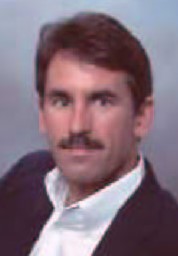

 Chair: Aaron Kiely
 Deputy Chair: Lucana Santos
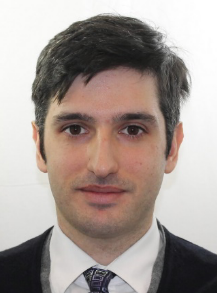 Chair: Andrea Modenini
 Deputy Chair: Kenneth Andrews
 Chair: Dennis Lee
 Chair: David Berry
 Chair: Peter van der Plas
 Chair: Holger Dreihahn
 Deputy Chair: Erik Barkley
 Deputy Chair: Marcin Gnat
 Chair: Alexander Kalkhof
 Chair: Peter Shames
 Deputy Chair: Dai Stanton
 Chair: Osvaldo Peinado
 Chair: Robert Durst
 Deputy Chair: Beth St. Peter
 Chair: Glenn Rakow
 Chair: Kevin Gifford
 Deputy Chair: Yuriy Sheynin
 Deputy Chair: Richard Melvin
 Chair: David Giaretta
 Chair: John Garrett
 Chair: Olivier Churlaud
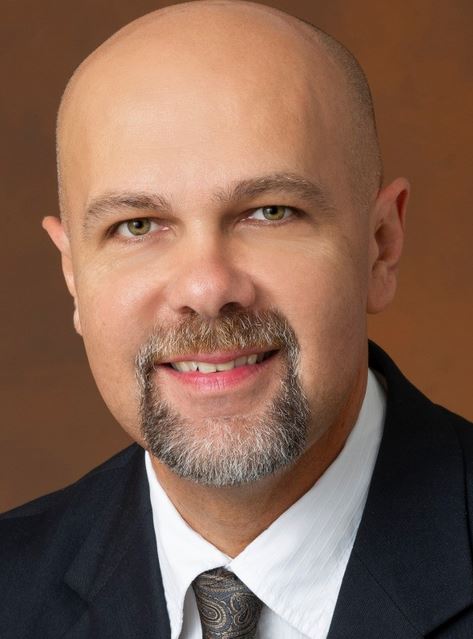 Deputy Chair: Costin Radulescu
 Area Director: Tomaso de Cola
 Deputy Area Director: ‘Vinny’ Ivica Ristovski
 Deputy Area Director: Jean-Luc Issler
 Deputy Area Director: Xiongwen He
 Area Director: Mehran Sarkarati
 Deputy Area Director: Stefan Gärtner
 Chair: Sinda Mejri
 Deputy: Yukio Yamamoto
 Chair: Javier de Vicente
 Deputy Chair: Christopher Volk
  Deputy Chair: Marcus Wallum
 Chair: Shelbun Cheng
 Deputy Chair: Paul Thompson
 Area Director: Jim Lux
 CESG Chair: Daniel Fischer
 CESG Deputy Chair: Tim Pham