The SANA Steering Group (SSG) is appointed by the CMC to provide the SANA operator with technical and programmatic guidance related to ongoing operational and policy matters. The Membership of the SANA Steering Group is determined and approved by the CMC.
The SSG is delegated responsibility for oversight of SANA operations, validation and confirmation of SANA operations, and acts as the first level of appeal for issues. In the event of issues with registries, policies, or practices, CCSDS working group members or the SANA operator may ask the SSG for guidance. SANA issues to be resolved by the SSG should be sent to ssg@sanaregistry.org.
POINTS OF CONTACT
 Chair: Peter Shames
NASA/Jet Propulsion Laboratory
M/S: 301-265
4800 Oak Grove Drive
Pasadena, CA 91109-8099
USA
Telephone: +1 818 354 5740
FAX: +1 818 393 1333
E-mail: Peter.M.Shames@jpl.nasa.gov
Bio: Click Here
MAILING LIST
ssg@mailman.ccsds.org
The CMC approves the organization that will act as the SANA. Its public interface is focused through web-based services provided by the Secretariat. The SANA is the CCSDS operational core registrar for the CMC’s activities. The day-to-day operation of the SANA is conducted by the SANA Operator as defined in the SANA Procedures Yellow Book, CCSDS 313.0-Y-0.3. Technical oversight of the activities of the SANA Operator are delegated to the SANA Steering Group (SSG).
Many space mission protocols require that someone keep track of key protocol numbering assignments that were added after the protocol came out. Typical examples of the kinds of registries needed are for Spacecraft IDs, protocol version numbers, reserved APIDs and SFDU Control Authorities. The SANA provides this key configuration management service for CCSDS.
There are many different data objects that need to be globally accessible within the CCSDS in order to support mission planning and operations and the activities of CCSDS itself. A “Data Object”, within this context, is defined as any known or imagined participant in mission communications, planning, and operations or trajectory propagation, tracking, attitude determination and orbit determination.
POINTS OF CONTACT
 SANA Operator: Cofomo
Main Point of Contact: Julien Bernard
128-825 Lebourgneuf
Quebec, Quebec
Canada
G2J 0B9
Telephone: +1 418 780 8718
Email: info@sanaregistry.org
The CCSDS Secretariat edits, formats, and publishes CCSDS Recommendations (in their various stages of maturity) and provides one definitive repository for all CCSDS documentation. The Secretariat also assists in scheduling and supporting all CCSDS meetings.
An important role of the Secretariat is to support the CMC process of formal Agency review. The vehicle for such review is the ‘Review Item Disposition’ or ‘RID’. When a document requires formal review, the Secretariat will announce the review opportunity to the CCSDS Agencies and will provide instructions that define how, when, and to whom the Agency comments (in the form of completed RIDs) are to be submitted.
The Secretariat provided a wide range of Web-based information services in support of the technical development work of CCSDS. These include archived mailing lists, document manipulation and sharing services, document libraries, electronic balloting facilities and a system to log and distribute Concept Papers that are derived early in the development process. The Secretariat shall also provide Web-based information services that cater to the two-way flow of information between CCSDS and its customers and industrial suppliers.
PUBLICATIONS
All CCSDS Approved Publications can be accessed by clicking here.
POINTS OF CONTACT
CCSDS Secretariat
Space Communications and Navigation Office, Mail Code 7X62
Space Operations Mission Directorate
NASA Headquarters
Washington, DC 20546-0001
Office: (+1) 202-358-5221
E-mail: Secretariat@mailman.ccsds.org
 General Secretary: Sami Asmar
Jet Propulsion Laboratory
4800 Oak Grove Drive Mail-Stop 301-450
Pasadena, CA 91109-8099
Telephone: 818-354-6288
Email: sami.w.asmar@jpl.nasa.gov
Bio: Click Here
MAILING LIST
Secretariat@mailman.ccsds.org
The Optical Communications Working Group (SLS-OPT) falls under the Space Link Services (SLS) Areas of the CCSDS.
POINTS OF CONTACT
 Chair: Dr. Jon Hamkins
NASA/Jet Propulsion Laboratory
4800 Oak Grove Drive
Pasadena, CA 91109-8099
USA
Telephone: NA
E-mail: Jon.Hamkins@jpl.nasa.gov
 Deputy Chair: Dr. Clemens Heese
ESA/ESOC
Robert-Bosch-Str. 5, 64293 Darmstadt
Germany
Telephone: NA
E-mail: clemens.heese@esa.int
MAILING LIST
sls-opt@mailman.ccsds.org
Click here to join mail list
Click here to view archives
The Space Data Link Layer Security Working Group (SLS-SEA-DLS) falls under the Space Link Services (SLS) Areas of the CCSDS.
The objectives of this Working Group is to develop a recommendation for a security protocol operating at the data link layer of CCSDS spacelinks. Target missions are civilian missions (science, earth observation, telecommunications, …). This security protocol should provide authentication and/or encryption both for uplink and downlink. It should be compatible with CCSDS TM, TC and AOS data link protocols and be independent from any specific cryptographic algorithm.
POINTS OF CONTACT
 Chair: Bruno Saba
CNES/Centre National d’Etudes Spatiales
18, Avenue Edouard Belin
31401 Toulouse Cedex 4
France
Telephone: +33 5 61 28 28 76
E-mail: bruno.saba@cnes.fr
 Deputy Chair: Howard Weiss
Parsons
7110 Samuel Morse Drive
Columbia, MD 20146
Telephone: +1.443.430.8089
FAX: +1.443.430.8238
E-mail: howard.weiss@parsons.us
MAILING LIST
sls-sea-dls@mailman.ccsds.org
Click here to join mail list
Click here to view archives
The Space Link Protocols Working Group (SLS-SLP) falls under the Space Link Services (SLS) Areas of the CCSDS.
This WG develops and adapts wherever possible link layer protocols for new mission environments (proximity communication, formation flying, optical communication, missions utilizing high rate telemetry and telecommand.
In line with the evolutions in the CCSDS link layer protocols which occurred in the recent years, e.g. development of the Proximity-1 Space Link Protocol, it has become necessary to update and complete the Green Books related to these protocols.
POINTS OF CONTACT


MAILING LIST
sls-slp@mailman.ccsds.org
Click here to join mail list
Click here to view archives
The Data Compression Working Group (SLS-MHDC) falls under the Space Link Services (SLS) Areas of the CCSDS.
On-board data compression is needed to make full use of limited spacecraft resources like data storage and downlink capacity. Multispectral & hyperspectral images can occupy enormous data volumes, and so compression algorithms specifically designed to exploit the three-dimensional structure of such images can provide tremendous benefit to space missions.
The Multispectral & Hyperspectral Data Compression working group has developed the CCSDS-123.0-B-1 standard, a state-of-the-art low-complexity lossless compressor.
The working group is now working on extending the CCSDS-122.0-B-1 (two-dimensional) image compressor by adding a spectral transform stage to provide multispectral and hyperspectral (three-dimensional) image compression.
POINTS OF CONTACT
 Chair: Aaron Kiely
NASA/Jet Propulsion Laboratory
Mail Stop 238-420
4800 Oak Grove Drive
Pasadena, CA 91109-8099
Telephone: +18183939048
E-mail: aaron.b.kiely@jpl.nasa.gov
 Deputy Chair: Lucana Santos
ESA/European Space Research and Technology Centre
Keplerlaan 1 NL-2201
AZ Noordwijk
The Netherlands
Telephone: NA
E-mail: lucana.santos@esa.int
MAILING LIST
sls-dc@mailman.ccsds.org
Click here to join mail list
Click here to view archives
Click here to view old SLS-MHDC archives
The Space Link Coding & Synchronization Working Group (SLS-C&S) falls under the Space Link Services (SLS) Areas of the CCSDS.
Agencies’ new generations of space missions require telecommand and telemetry capabilities beyond current technologies to interconnect a spacecraft with its ground support system, or with another spacecraft. These new needs are for higher data rates, better link performances, together with lower cost, mass and power and higher security.
The wide range of environment (space-Earth or space-space, near Earth congested bands and deep space link operations in extreme conditions of SNR, links dependent of atmospheric conditions in the new high frequency bands, optical links) requires coding systems with different levels of power efficiency and bandwidth efficiency, or different levels of link reliability or delivered data quality;
This work will concentrate on updating the existing set of Channel Coding Blue Books to incorporate recommended coding scheme for new bandwidth efficient codes with low complexity. The update work includes also the extraction of the coding layer out of CCSDS 211.0-B Prox-1 Protocol.
POINTS OF CONTACT
 Chair: Nicola Maturo
ESA/European Space Agency
ESTEC
Keplerlaan 1, PO Box 299, 2200 AG Noordwijk, The Netherlands
Telephone: +31 641344089
E-mail: nicola.maturo@esa.int
 Deputy Chair: Kenneth Andrews
NASA/Propulsion Laboratory
Mail stop 238-420
4800 Oak Grove Drive
Pasadena, CA 91109
Telephone: NA
E-mail: Kenneth.S.Andrews@jpl.nasa.gov
MAILING LIST
sls-cc@mailman.ccsds.org
Click here to join mail list
Click here to view archives
The RF Modulation Working Group (SLS-RFM) falls under the Space Link Services (SLS) Areas of the CCSDS.
Agencies’ new generations of space missions require telecommand and telemetry capabilities beyond current technologies to interconnect a spacecraft with its ground support system, or with another spacecraft. These new needs are for higher data rates, better link performances, more performing ranging systems, together with lower cost, mass and power and higher security.
POINTS OF CONTACT
 Chair: Dennis Lee
NASA/Jet Propulsion Laboratory
9800 Oak Grove Dr
Pasadena, CA 91109
Telephone: (818) 354-6908
E-mail: Dennis.K.Lee@jpl.nasa.gov
Deputy Chair: Gunther Sessler
ESA/European Space Agency
Robert Bosch Strasse No. 5
64293 Darmstadt
Germany
Telephone:
E-mail: Gunther.Sessler@esa.int
MAILING LIST
sls-rfm@mailman.ccsds.org
Click here to join mail list
Click here to view archives
The Navigation Working Group (MOIMS-NAV) falls under the Mission Operations and Information Management Services (MOIMS) Areas of the CCSDS.
The Navigation Working Group provides a discipline-oriented forum for detailed discussions and development of technical flight dynamics standards.
POINTS OF CONTACT
 Chair: Daniel Oltrogge
COMSPOC Corporation
224 Valley Creek Blvd
Suite 210, Exton, PA 19341
Telephone: +1-610-220-0272
E-mail: dan@comspoc.com
Deputy Chair: Frank Dreger
Space Operations Centre
Robert-Bosch-Str. 5
64293 Darmstadt – Germany
Telephone: +49 (0)6151-90-2284
Email: Frank.Dreger@esa.int
MAILING LIST
moims-nav@mailman.ccsds.org
Click here to join mail list
Click here to view archives
The Mission Planning and Scheduling Working Group (MOIMS-MP) falls under the Mission Operations and Information Management Services (MOIMS) Areas of the CCSDS.
POINTS OF CONTACT
 Chair: Peter van der Plas
ESA/ESTEC
Keplerlaan 1
2201 AZ Noordwijk
The Netherlands
Telephone: +31 71 565 5848
Fax: +31 71 565 5420
E-mail: Peter.van.der.Plas@esa.int
MAILING LIST
moims-mp@mailman.ccsds.org
Click here to join mail list
Click here to view archives
The Cloud Data Delivery Standards Working Group (CSS-CLOUD) falls under the Cross Support Services (CSS) Area of the CCSDS.
POINTS OF CONTACT
 Chair: Holger Dreihahn
Ground Station Back-end Section (OPS-GIB)
European Space Agency ESA/ESOC
Robert-Bosch-Str. 5
D-64293 Darmstadt – Germany
Telephone: +49 6151 90 2233
E-mail: Holger.Dreihahn@esa.int
 Deputy Chair: Erik Barkley
NASA/Jet Propulsion Laboratory
4800 Oak Grove Drive
Pasadena, CA 91109-8099
USA
MAILING LIST
css-cloud@mailman.ccsds.org
Click here to join mail list
Click here to view archives
The Service Management Working Group (CSS-SM) falls under the Cross Support Services (CSS) Area of the CCSDS
The use of Space Link Extension services require the exchange of information that will allow a space flight mission to acquire those services from SLE service providers. The current ad hoc mechanisms for arranging, scheduling, control, and monitoring of SLE services are fragile and manually intensive. Production of the currently-specified suite of SLE services is coupled to the underlying radio frequency, modulation, coding, and link characteristics. There are no current standards for arranging, scheduling, control, and monitoring of TT&C services. The potential user base for a service management standard for arranging, scheduling, control, and monitoring of SLE and TT&C services is larger than the space Agencies that constitute the CCSDS membership.
POINTS OF CONTACT
Chair: Erik Barkley
NASA/Jet Propulsion Laboratory
4800 Oak Grove Drive
Pasadena, CA 91109-8099
USA
Telephone: +1 818 393 4972
FAX: +1 818 393 5088
E-mail: Erik.Barkley@jpl.nasa.gov
 Deputy Chair: Marcin Gnat
Deutsches Zentrum für Luft- und Raumfahrt e.V. (DLR)
Oberpfaffenhofen
82234 Wessling
Germany
Telephone: +49 8153 28 3201
E-Mail: Marcin.Gnat@dlr.de
MAILING LIST
smwg@mailman.ccsds.org
Click here to join mail list
Click here to view archives
The Transfer Services Working Group (CSS-CSTS) falls under the Cross Support Services (CSS) Area of the CCSDS.
POINTS OF CONTACT
 Chair: Alexander Kalkhof
DLR
Münchener Straße 20
82234 Weßling
Telephone: +49 1525 5910396
E-mail: alexander.kalkhof@dlr.de
MAILING LIST
css-csts@mailman.ccsds.org
Click here to join mail list
Click here to view archives
The SANA Steering Group (SSG) is appointed by the CMC to provide the SANA operator with technical and programmatic guidance related to ongoing operational and policy matters. The Membership of the SANA Steering Group is determined and approved by the CMC.
The SSG is delegated responsibility for oversight of SANA operations, validation and confirmation of SANA operations, and acts as the first level of appeal for issues. In the event of issues with registries, policies, or practices, CCSDS working group members or the SANA operator may ask the SSG for guidance. SANA issues to be resolved by the SSG should be sent to ssg@sanaregistry.org.
POINTS OF CONTACT
 Chair: Peter Shames
NASA/Jet Propulsion Laboratory
M/S: 301-265
4800 Oak Grove Drive
Pasadena, CA 91109-8099
USA
Telephone: +1 818 354 5740
FAX: +1 818 393 1333
E-mail: Peter.M.Shames@jpl.nasa.gov
Bio: Click Here
MAILING LIST
ssg@mailman.ccsds.org
The CCSDS File Delivery Protocol Revisions Working Group (SIS-CFDPV1) falls under the Space Internetworking Services (SIS) Areas of the CCSDS.
The objective of the WG is to introduce revisions to the CCSDS File Delivery Protocol (SIS-CFDPV1) that will enhance the protocol’s suitability for deployment in upcoming space flight missions. Among the proposed revisions are an increase in the limit on the size of file that may be transmitted, a mechanism for attaching metadata to each file data segment individually, and improved support for record structures in transmitted files.
POINTS OF CONTACT
Chair: Felix Flentge
ESA/European Space Agency
ESOC Robert-Bosch-Str.5
D-64293 Darmstadt, Germany
Telephone: +33 1 53 69 76 54
E-mail: felix.flentge@esa.int
 Deputy Chair: Dai Stanton
5 Sherwood Road
Hampton Hill
TW12 1DF
United Kingdom
Telephone: +44 208 979 0234
FAX: +44 208 979 0234
E-mail: dstanton@keltik.co.uk
MAILING LIST
sis-cfdpv1@mailman.ccsds.org
Click here to join mail list
Click here to view archives
The Voice Working Group (SIS-VOICE) falls under the Space Internetworking Services (SIS) Areas of the CCSDS.
POINTS OF CONTACT
 Chair: Osvaldo Peinado
DLR/German Aerospace Center
Oberpfaffenhofen 82234
Wessling Germany
Telephone: +49 8153 28 3010
Fax: +49 8153 28 1456
E-mail: osvaldo.peinado@dlr.de
Deputy Chair: Ivan Antonov
FRSA/Russian Federal Space Agency
TsNIImash (Mission Control Centre)
Deputy IT-Division Chief
E-mail: aid@mcc.rsa.ru
MAILING LIST
sis-voice@mailman.ccsds.org
Click here to join mail list
Click here to view archives
Delay Tolerant Networking Working Group (SIS-DTN) falls under the Space Internetworking Services (SIS) Areas of the CCSDS.
The Delay Tolerant Networking Working Group is specifying the protocols needed to implement the Solar System Internetwork (SSI) concept. These protocols support the portion of the SIS communication domain where large delays, intermittent connectivity, and/or unidirectional communications links may be present.
The main internetworking protocol in the Solar System Internet is the Bundle Protocol (BP). BP is a message-oriented store-and-forward communication protocol with optional reliability that is suitable for use when contemporaneous end-to-end connectivity cannot be guaranteed. BP routers may store data (bundles) before forwarding them, possibly for long periods of time. This allows routers to forward data even if the outbound communication link is not available when the data arrives. The Bundle Protocol and all the supporting protocols in the SSI suite are designed for these conditions. This is in contrast to many of the protocols in the Internet Protocol (IP) suite that at least implicitly assume low delays and end-to-end connectivity. The working group is specifying a profile of the Bundle Protocol as specified in Internet RFC5050 for use by CCSDS.
BP has been demonstrated in a number of experiments both on the ground and with spacecraft, including the Deep-Space Networking Experiment (DINET), the Earth-Observing Mission-1 (EO-1) spacecraft, and various single- and multi-agency experiments on the International Space Station (ISS).
In addition to the Bundle Protocol, the working group is specifying a profile of the Licklider Transmission Protocol (LTP, RFC5326) for use in CCSDS missions, as well as network management and security protocols.
The group works with and leverages work done in the terrestrial DTN community, including the Internet Research Task Force’s DTN Research Group (http://www.dtnrg.org).
POINTS OF CONTACT
 Chair: Robert Durst
MITRE Corporation
M/S H400
7515 Colshire Drive
McLean, VA 22102
USA
E-mail: durst@mitre.org
Deputy Chair: Felix Flentge
ESA/European Space Agency
ESOC Robert-Bosch-Str.5
D-64293 Darmstadt, Germany
Telephone: +33 1 53 69 76 54
E-mail: felix.flentge@esa.int
MAILING LIST
sis-dtn@mailman.ccsds.org
Click here to join mail list
Click here to view archives
Motion Imagery and Applications Voice Working Group (SIS-MIVA) falls under the Space Internetworking Services (SIS) Areas of the CCSDS.
Voice communications are an enabler of mission success and mission safety, which are crucial for all kinds of space-related tasks. Moreover, video and imagery applications are necessary parts of space missions and will become even more important in future space applications and when exploring deeper into space.
POINTS OF CONTACT
 Chair: Falk Schiffner
German Aerospace Center (DLR e.V.)
Space Operations & Astronaut Training | Communication & Ground Stations
Rutherfordstrasse 2 | 12489 Berlin
Telephone: NA
E-mail: falk.schiffner@dlr.de
 Deputy Chair: Beth St. Peter
NASA/Marshall Space Flight Center (MSFC)
Mail Code: HP10
Huntsville, AL 35812
Telephone: NA
E-mail: elizabeth.m.stpeter@nasa.gov
MAILING LIST
sis-miva@mailman.ccsds.org
Click here to join mail list
Click here to view archives
The Subnetork Services Working Group (SOIS-SUBNET) falls under the Spacecraft Onboard Interface Services (SOIS) Areas of the CCSDS.
The Subnetwork Services Working Group is concerned with the transfer of information onboard a spacecraft between its constituent subsystem components. In practice this involves both hardwired systems and wireless systems.
The mission of the Subnetwork Services Working Groups to serve as a CCSDS focus group for onboard network technologies. The goals of the WG are to define services and make recommendations pursuant to standardization of applicable data link protocols and related subnetwork services, ensuring inter-operability of independently developed space vehicles and spacecraft onboard networks.
POINTS OF CONTACT
 Chair: Glenn Rakow
NASA/GSFC
8800 Greenbelt Rd.
Greenbelt, MD 20771 USA
Telephone: NA
E-mail: Glenn.P.Rakow@nasa.gov
Deputy Chair: Marco Rovatti
ESA/ESTEC
Keplerlaan 1 2201AZ
Noordwijk the Netherlands
Telephone: NA
E-mail: marco.rovatti@esa.int
MAILING LIST
sois-subnet@mailman.ccsds.org
Click here to join mail list
Click here to view archives
The Onboard Wireless Working Group (SOIS-WIR) falls under the Spacecraft Onboard Interface Services (SOIS) Areas of the CCSDS.
The short term aims of the Onboard Wireless Working Group will be:
POINTS OF CONTACT
 Chair: Kevin Gifford
University of Colorado
Engineering Center, Rm. ECOT-313
Interdisciplinary Telecommunications Department
Boulder, Colorado USA 80309-0530
Telephone: +1.303.735.4536
E-mail: kevin.gifford@colorado.edu
 Deputy Chair: Yuriy Sheynin
St. Petersburg State University of Aerospace Instrumentation
67, Bolshay Morskaya str.
190 000, St. Petersburg Russia
Telephone: +7 812 710 6234
Fax: +7 812 315 77 78
E-mail: sheynin@aanet.ru
MAILING LIST
sois-wir@mailman.ccsds.org
Click here to join mail list
Click here to view archives
The Applications Support Services Working Group (SOIS-APP) falls under the Spacecraft Onboard Interface Services (SOIS) Areas of the CCSDS.
The Applications Support Services Working Group defines standard services that are provided to onboard software applications. These services isolate the flight software from the underlying hardware details and thereby increase the portability and reuse potential of the flight software. Furthermore, the service access points constitute cross support interfaces.
The standard services that are addressed by this working group are those that have been identified during previous CCSDS SOIF activities as being common requirements in all spacecraft missions, and providing the maximum benefit for flight software development. Furthermore, it is explicitly recognized that interoperability and cross support capabilities need to be provided throughout the project lifecycle, and particularly during application development, integration, and testing, not just during operations.
POINTS OF CONTACT
Chair: Simon Singh
NASA/Goddard Space Flight Center
8800 Greenbelt Rd
Greenbelt Maryland, 20771
Telephone: NA
E-mail: simon.singh@nasa.gov
 Deputy Chair: Richard Melvin
SCISYS Clothier Road
Bristol BS4 5SS UK
Telephone: +44 7952 674 324
E-mail: richard.melvin@scisys.co.uk
MAILING LIST
sois-app@mailman.ccsds.org
Click here to join mail list
Click here to view archives
The Data Archive Interoperability Working Group (MOIMS-DAI) falls under the Mission Operations and Information Management Services (MOIMS) Areas of the CCSDS.
Agencies need to reduce the cost and increase the automation associated with acquiring and ingesting data and metadata to archives. Archives, including both mission and final, need appropriate metadata to accompany data objects to facilitate long term preservation. Currently submission requirements are usually totally ad hoc by mission, or by a given multi-mission archive or final archive. Producers of information for archives often seek guidance on how to submit such information. The OAIS reference model and the Producer-Archive Interface Methodology Abstract Standard set a context for all archives. Further, registries are of increasing importance as the holders of re-usable metadata in the exchange of information. This work will establish an extensible framework for a Submission Information Package (SIP). It will include mandatory and optional elements, with the ability to recognize categories of information and relationships.
POINTS OF CONTACT
 Chair: David Giaretta
UK Space Agency/STFC
Rutherford Appleton Laboratory
Chilton, Didcot Oxon OX11 0QX UK
Telephone: +44 1235 446235
FAX: +44 1235 445848
E-mail:david@giaretta.org
 Chair: John Garrett
Garrett Software
10703 Cordage Walk
Columbia, MD 21044
Telephone: +1 410 992 3545
E-mail:garrett@his.com
MAILING LIST
moims-dai@mailman.ccsds.org
Click here to join mail list
Click here to view archives
The Spacecraft Monitor and Control Working Group (MOIMS-SC) falls under the Mission Operations and Information Management Services (MOIMS) Areas of the CCSDS.
There is a general trend toward increasing mission complexity at the same time as increasing pressure to reduce the cost of mission operations, both in terms of initial deployment and recurrent expenditure. Current closed, or monolithic¹, mission operations system architectures do not allow the re-distribution of functionality between space and ground, or between nodes of the ground system. The SM&C WG is defining a service oriented architecture consisting of set of standard services, which constitutes a framework that enables many similar systems to be assembled from compliant plug-in¹ components. These components may be located anywhere, provided they are connected via a common infrastructure. This allows components to be re-used in different mission-specific deployments: between agencies, between missions, and between systems. By layering the services themselves, the service specifications can be made independent of the underlying technology and the application coding language. Specific technology adapters enable the deployment of the service framework over a given technology. This in turn makes it possible to replace the infrastructure implementation as well as component implementations. It is also possible to transparently bridge between different infrastructure implementations, where these are appropriate to different communications environments (e.g., space or ground) or simply reflect different agencies deployment choices. More info under http://en.wikipedia.org/wiki/SM&C.
POINTS OF CONTACT
 Chair: Olivier Churlaud
CNES/Centre national d’études spatiales
18 avenue Edouard Belin 31401
Toulouse Cedex 9, France
Telephone: +33 (0)5 61 28 19 08
E-mail: olivier.churlaud@cnes.fr
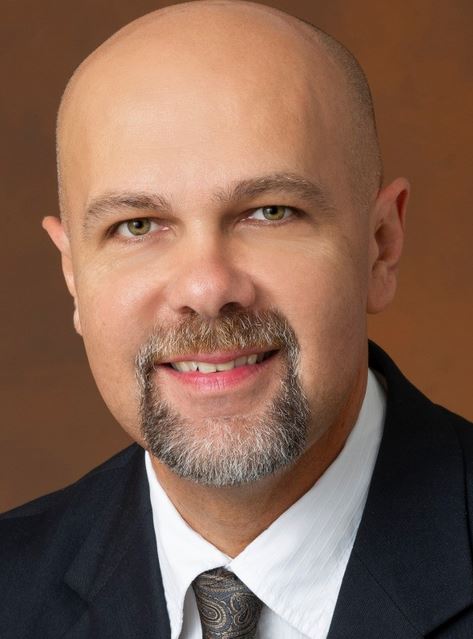 Deputy Chair: Costin Radulescu
NASA/Jet Propulsion Laboratory
4800 Oak Grove Drive
M/S 168-300
Pasadena CA 91109-8099
Telephone: NA
E-mail: costin.radulescu@jpl.nasa.gov
MAILING LIST
moims-sc@mailman.ccsds.org
Click here to join mail list
Click here to view archives
The objective of the Space Internetworking Services (SIS) Area is to address the communications services and protocols supporting end-to-end communications among applications, particularly where those communications may span multiple heterogeneous physical and data link technologies. Areas addressed by SIS include the networking infrastructure to support application-to-application communication onboard a single spacecraft, communications among multiple spacecraft, and communications between space-based applications and their counterparts on Earth and/or other planetary bodies.
The SIS Area deals with communication services and protocols that are independent of specific link technology (as a lower layer bound) and independent of application-specific semantics (as an upper bound). Thus the SIS area covers essentially the network through application layers of the OSI reference model.
SIS protocols use the underlying communication and infrastructure services provided by the Space Link Services (SLS) and Spacecraft Onboard Interface Services (SOIS) areas and any other onboard networks, and provide the networked connectivity needed by applications developed in other CCSDS areas such as Mission Operations and Information Management Services (MOIMS) and Spacecraft Onboard Interface Services (SOIS). The SIS services provide hardware-independent mechanisms for identifying end systems, and provide communications services that allow users to disregard whether the communication is over a single data link layer or over multiple hops. The suite of capabilities developed by the SIS Area accommodates all ranges of delay, interactivity, and directionality, although not all protocols are appropriate for all environments.
The services provided by SIS protocols free applications from having to have intimate knowledge of the underlying communications protocols and mechanisms, and from having to know the physical location(s) of the entities with which they are communicating. This enables applications to focus on the application-specific protocols and interactions necessary to achieve their goals.
PUBLICATIONS
SIS Area Approved Publications can be accessed by clicking here. All CCSDS Approved Publications can be accessed by clicking here.
POINTS OF CONTACT
 Area Director: Tomaso de Cola
DLR/German Aerospace Center
Institute of Communications and Navigation
Satellite Networks
Münchner Straße 20
82234 Oberpfaffenhofen-Wessling
Telephone: +49 8153 28-2156
Fax: +49 8153 28-2844
E-mail: tomaso.decola@dlr.de
Bio: Click Here
 Deputy Area Director: ‘Vinny’ Ivica Ristovski
NASA/Marshal Space Flight Center
Mail Code EO50
Marshall Space Flight Center, AL 35812
Telephone: +1 256 544-3646
E-mail: ivica.ristovski@nasa.gov
Bio: Click Here
MAILING LIST
sis@mailman.ccsds.org
Click here to join mail list
Click here to view archives
The Space Link services area is in charge, within CCSDS, to develop efficient space link communications systems common to all participating agencies. A space link interconnects a spacecraft with its ground support system or with another spacecraft. Agencies’ new generations of space missions require telecommand and telemetry capabilities beyond current technologies. These new needs are for higher data rates, better link performances, more performing ranging systems, together with lower cost, mass and power and higher security.
More specifically, SLS area concentrates on layers 1 & 2 (of OSI protocol stack), namely : RF & modulation, channel coding and data link layer, for both long-haul (e.g.: spacecraft to ground) and proximity links (e.g.: orbiter to lander). Two additional functions are also covered by the SLS area : data compression for end to end data transfer optimization, and ranging for accurate orbit determination.
The area is composed of specialized working group whose objective is to develop specific recommendations. One recommendation will typically cover one OSI layer or sub-layer. This layering of recommendations maximizes flexibility and interoperability with other commercial protocols (e.g. : TCP/IP).
PUBLICATIONS
SLS Area Approved Publications can be accessed by clicking here. All CCSDS Approved Publications can be accessed by clicking here.
POINTS OF CONTACT
Area Director: Dr. Clemens Heese
ESA/ESOC
Robert-Bosch-Str. 5, 64293 Darmstadt
Germany
Telephone: NA
E-mail: clemens.heese@esa.int
 Deputy Area Director: Jean-Luc Issler
CNES/Centre National d’Etudes Spatiales
18, Avenue Edouard Belin
31401 Toulouse Cedex 4
France
Telephone: +33 5 61 27 36 57
E-mail: jean-luc.issler@cnes.fr
MAILING LIST
sls@mailman.ccsds.org
Click here to join mail list
Click here to view archives
The primary objective of the CCSDS SOIS standard development activities is to radically improve the spacecraft flight segment data systems design and development process by defining generic services that will simplify the way flight software interacts with flight hardware and permitting interoperability and reusability both for the benefit of Agencies and Industrial contractors.
PUBLICATIONS
SOIS Area Approved Publications can be accessed by clicking here. All CCSDS Approved Publications can be accessed by clicking here.
POINTS OF CONTACT
Chair: Simon Singh
NASA/GSFC
Code 582
Greenbelt Maryland, 20771
E-mail: simon.singh@nasa.gov
 Deputy Area Director: Xiongwen He
CAST
Beijing Institute of Spacecraft System Engineering
China Academy of Space Technology
E-mail: hexw501@hotmail.com
Bio: Click Here
MAILING LIST
sois@mailman.ccsds.org
Click here to join mail list
Click here to view archives
The Cross Support Services (CSS) Area addresses how space network resources are made available by one organization to another for the purpose of “Cross Support”. The objective of the CSS Area is therefore to define what services are required at various cross-support interface points, and how those services are exposed, scheduled and used by organizations that want to confederate their infrastructure in order to execute a mission.
PUBLICATIONS
CSS Area Approved Publications can be accessed by clicking here. All CCSDS Approved Publications can be accessed by clicking here.
POINTS OF CONTACT
Area Director: Erik Barkley
NASA/Jet Propulsion Laboratory
4800 Oak Grove Drive
Pasadena, CA 91109-8099
USA
Telephone: +1 818 393 4972
FAX: +1 818 393 5088
E-mail: Erik.Barkley@jpl.nasa.gov
Bio: Click Here
Deputy Area Director: Holger Dreihahn
Ground Station Back-end Section (OPS-GIB)
European Space Agency ESA/ESOC
Robert-Bosch-Str. 5
D-64293 Darmstadt – Germany
Telephone: +49 6151 90 2233
E-mail: Holger.Dreihahn@esa.int
MAILING LIST
css@mailman.ccsds.org
Click here to join mail list
Click here to view archives
The objective of the Mission Operations and Information Management Services (MOIMS) Area is to address all of the flight execution phase applications that are required to operate the spacecraft and its ground system in response to mission objectives, and their associated detailed information management standards and processes. The focus of this Area is primarily on the “mission operations” functions that occur on a timescale driven by the flight path of the space vehicle. In many cases a dedicated community conducts these mission operations, while “mission utilization” occurs on a timescale that is convenient for users and is often conducted by a separate community. The MOIMS Area ensures that application standards exist which facilitate the smooth transition of space mission information between the “mission operations” systems and the “mission utilization” systems.
PUBLICATIONS
MOIMS Area Approved Publications can be accessed by clicking here. All CCSDS Approved Publications can be accessed by clicking here.
POINTS OF CONTACT
 Area Director: Mehran Sarkarati
ESA/European Space Operations Centre
Robert-Bosch-Str. 5 64293
Darmstadt Germany
Telephone: NA
E-mail: mehran.sarkarati@esa.int
 Deputy Area Director: Stefan Gärtner
DLR/German Aerospace Center
German Space Operations Center, Mission Technology
Münchener Straße 20
82234 Weßling, Germanyy
Telephone: +49 8153 28 3308
E-mail:stefan.gaertner@dlr.de
Bio: Click Here
MAILING LIST
moims@mailman.ccsds.org
Click here to join mail list
Click here to view archives
The Time Management Working Group (SEA-TIME) falls under the Systems Engineering (SEA) Areas of the CCSDS.
The Time Management Working Group will concentrate on creating and maintaining standards relating to time transfer, time correlation, and time synchronization in space operations contexts. The activities will be coordinated under the Systems Engineering Area (SEA).
POINTS OF CONTACT
 Chair: Sinda Mejri
 Deputy: Yukio Yamamoto
The Delta-DOR Working Group (SEA-D-DOR) falls under the Systems Engineering (SEA) Areas of the CCSDS.
This working group is intended to provide a forum for developing an integrated approach for delta differential one way ranging (D-DOR) end to end services.
– Develop detailed requirements for delta differential one-way ranging (Delta-DOR) service
– Coordinate work in other WGs (SIS/Ranging, CSS/CSTS, MOIMS/Nav)
– Develop integrated vision of service and interoperability points
– Develop any over-arching documents, as needed
POINTS OF CONTACT
 Chair: Javier de Vicente
ESA/ESOC
Robert-Bosch-Str. 5
64293 Darmstadt
Germany
Telephone: NA
E-mail: javier.devicente@esa.int
 Deputy Chair: Christopher Volk
NASA/JPL
4800 Oak Grove Drive
Pasadena CA 91009
United States
Telephone: +16263752151
E-mail: christopher.p.volk@jpl.nasa.gov
MAILING LIST
sea-d-dor@mailman.ccsds.org
Click here to join mail list
Click here to view archives
The Security Working Group (SEA-SEC) falls under the Systems Engineering (SEA) Areas of the CCSDS.
CCSDS develops communications and mission operation standards that support inter and intra agency operations and cross support. CCSDS standards include elements of flight and ground systems that are developed and operated by different agencies and organizations.
Over the years, ubiquitous network connectivity among principal investigators and mission operations has become the norm, which makes mission operations more dangerous than in the past when operations were carried out over closed, mission-only networks. The security risks to both spacecraft and ground systems have increased to the point where CCSDS must adopt existing or develop (as necessary) Information Security standards in order to protect both flight and ground mission critical resources and protect sensitive mission information.
As a result, a mission threat statement for CCSDS should be developed in order to allow mission planners to better understand the threats that they should plan to counter via security requirements. CCSDS also requires a Security Architecture as part of its overall System Architecture. CCSDS must promote secure interoperability for space missions. CCSDS also requires Information Security standards as part of, or as an accompaniment to its communications and mission operations standards.
POINTS OF CONTACT
Chair: Howard Weiss
Parsons
7110 Samuel Morse Drive
Columbia, MD 20146
USA
Telephone: +1-443-494-9087
E-mail:howard.weiss@parsons.us
 Deputy Chair: Marcus Wallum
ESA/ESOC
Robert-Bosch-Str. 5
D-64392
Darmstadt, Germany
E-mail:marcus.wallum@esa.int
MAILING LIST
sea-sec@mailman.ccsds.org
Click here to join mail list
Click here to view archives
The Systems Architecture Working Group (SEA-SA) falls under the Systems Engineering (SEA) Areas of the CCSDS.
The work done in the other Working Groups is focused upon services and protocols provided by specific components of space data systems. In order for these Working Groups to generate standards in such a way that every standard is consistent and coherent with any other standard generated by CCSDS, CCSDS requires a reference architecture that can be used as a common framework by all the Working Groups of CCSDS and also by engineers in the member Agencies who use CCSDS standards to build systems and to provide services. The reference architecture should encompass both informatics and telematics aspects of space data systems and cover all problem areas associated with space data systems (such as organizational, functional, operational and cross support issues).
POINTS OF CONTACT
 Chair: Shelbun Cheng
 Deputy Chair: Paul Thompson
The System Engineering Area (SEA) supports the work of the CCSDS by providing :
– Overall architecture for space mission communications, operations, and cross-support
– Coordination and collaboration with the other areas about architectural choices and options
– Supporting the CESG in evaluating consistency of all area programs of work with the defined architecture
– Creating such working groups and BoFs as are required to progress the work of CCSDS
PUBLICATIONS
SEA Area Approved Publications can be accessed by clicking here All CCSDS Approved Publications can be accessed by clicking here.
POINTS OF CONTACT
 Area Director: Jim Lux
MAILING LIST
sea@mailman.ccsds.org
Click here to join mail list
Click here to view archives
The CCSDS Engineering Steering Group (CESG) provides technical management across the various CCSDS Areas and ensures top-level technical coordination of the overall international standardization process. It ensures that all developments occur in accordance with procedures, schedules, and resources that have been negotiated with the CMC. To do its job the CESG adopts and applies uniform architectural views that guide the systems protocols, policies and procedures used for international space mission cross support. The CESG is directly responsible for executing the actions associated with entry into and movement along the CCSDS standardization tracks, including making recommendations to the CMC for approval of specifications as they progress through the various stages of standardization.
PUBLICATIONS
All CCSDS Approved Publications can be accessed by clicking here.
POINTS OF CONTACT
 CESG Chair: Daniel Fischer
ESA/European Space Agency
Robert-Bosch-Str.5
64392 Darmstadt
Telephone: +49 6151 90 2718
E-mail:Daniel.Fischer@esa.int
Bio: Click Here
 CESG Deputy Chair: Tim Pham
NASA/Jet Propulsion Laboratory
4800 Oak Grove
Pasadena, CA 91214, USA
Telephone: NA
E-mail: timothy.t.pham@jpl.nasa.gov
Bio: Click Here
MAILING LIST
cesg@mailman.ccsds.org
Click here to view archives
The CCSDS Management Council (CMC) is the executive management oversight group of the organization. The CMC is populated by Principal Delegates who are independently supported by each of the Members (one per agency). The CMC is responsible for staying technically and politically informed about important long-term issues in the field of international space mission cross support and for keeping an eye on the “big picture” of the CCSDS program of work. It therefore focuses on long-range planning and coordination among the various CCSDS discipline-oriented domains, on making sure that adequate resources exist to do work, and that customer requirements are satisfied in a timely manner.
PUBLICATIONS
All CCSDS Approved Publications can be accessed by clicking here.
POINTS OF CONTACT
General Secretary: Sami Asmar
Jet Propulsion Laboratory
4800 Oak Grove Drive Mail-Stop 301-450
Pasadena, CA 91109-8099
Telephone: 818-354-6288
Email: sami.w.asmar@jpl.nasa.gov
Bio: Click Here
MAILING LIST
cmc@mailman.ccsds.org
Click here to view archives
